
Concluding our 14-week Journey


Throughout this project, the team has learned a lot of information regarding the lifestyle of a scorpion. This includes the habitats, physical characteristics and also the feeding habits of the scorpion. Besides that, this blog also encourages the people to be aware of the positive impacts of a scorpion towards the overall development of sustainability and innovation. This is because; from this blog, it shows the applications of scorpion’s natural behavior and physical properties towards the development of modern technologies such as, the development for the cure of cancer, safe pesticides and motorbike design. This was mainly done by mimicking the properties and components of the scorpion. Therefore, by biologically mimicking the scorpion’s lifestyle, humans have developed several new technologies that will benefit the future of mankind. 

As a result, this blog has will show readers a different view about scorpions, since they are generally perceived and considered as being too lethal and dangerous for mankind, however this blog shows the contrary, that scorpions have many contribution towards the development of modern technologies of mankind.
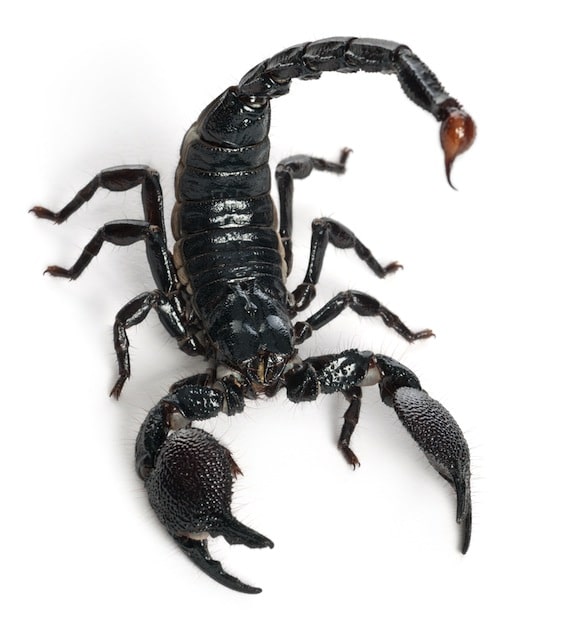
Reflecting back on what we've learned thus far...

Where are we going as a species? How will we get there? Do we stand a chance?

These are questions biomimicry asks and attempts to find solutions to. The clues to innovate and sustain life are found in the genius that surrounds us.

We all know that to solve the grand challenges that threaten our existence on this planet, we need to learn to adapt as a species and fit in with the ecosystem. We have to learn to create conditions that are conducive, not destructive to life.

In order for that to happen, we need to consciously make choices to emulate the way nature does things in the way we design products, services, buildings and so on.
There are 30 million species that co-exist on the planet today. We as humans only make up less than 1 % of those species that have ever lived on Earth 3.8 billion years ago.

There is no sure guarantee that any one of the species. Including us, will remain in the time to come. We are all subject to the laws of nature, no matter how small or how significant. However, we are constantly surrounded by cases of species that have adapted and evolved to create a future for their kind.

The Earth is certainly not going to last, based on the way we’ve treated it till today. This planet is not here for us to plunder and consume it for our own benefit.

When we change our mindset and attitude about our behaviour towards Earth, to see that it is here to guide us and mentor us, only then will we have the right motivation and perspective to survive, thrive and live harmoniously.

Biomimicry is based on the truth that we aren’t the only species that call Earth home. Remember life is always bigger than us and our ambitions, for the clues to our path forward can be found in the wealth of wisdom of the 3.8 billion years that surrounds us. 


Development of Safe Pesticides

In this post, we will share the interesting facts of the scorpion venom and how it is a bioinspiration to the development of safe pesticides.

A Tel Aviv university researcher has found a way to harness the different types of toxins found in scorpion venom to create safe pesticides. This is because it is found that certain toxins in the venom damage only insects, while some only affect certain types of insects.

This has given inspiration to Professor Michael Gurevitz of Tel Aviv University to develop methods of producing the toxins as well as manipulating the levels of toxicity in certain types of animals or insects.

Source : http://www.petlifepharma.com/facilities.html

Using the venom of the Israeli yellow scorpion, known to be among the world’s most poisonous scorpions, genetic methods have been developed to produce these toxins in labs. According to research and experiments, some toxins in scorpion venom can affect insects such as locusts, flies and beetles, yet they are harmless to insects such as honeybees and humans. These toxins are intended to be spread through bacteria to infect the targeted pestilences, potentially providing extreme benefits for the agricultural industry.

Source : http://www.windsorstar.com/travel/photos+life+negev/8842554/story.html

Apparently, Professor Michael only thought about delivering the toxins through bacteria after numerous failed attempts at injecting the toxins into the plants, hoping for the plant to produce the toxins to kill the targeted insects.


Stay tuned for more updates, next up is Microsurgery!


Scorpions and Microsurgery

In this post, we will share an idea of how we think mimicking the characteristics and features of a scorpion can help in the advancement of microsurgery


A scorpion is known to have two front pincers, named the pedipalps, as well as a long, curved tail called the stinger. When a scorpion prepares to sting an enemy, it first holds on to its prey with its pedipalps to keep it steady to then deliver a deadly dose of venom through its stinger. 

Source: http://blogs.discovermagazine.com/notrocketscience/2011/12/23/why-do-scorpions-glow-in-the-dark-and-could-their-whole-bodies-be-one-big-eye/#.VYgKTPmqqko

Besides that, a scorpion can also glow in the dark. According to scientists, it is still unknown as to why scorpions are luminescent. Some have suggested that it is accidental, a by-product of a normal chemical reaction of body fluids.

Source: http://palaeo.gly.bris.ac.uk/palaeofiles/fossilgroups/arachnid/scranat.jpg/Slide1.jpg

From this basic anatomy knowledge of a scorpion, we have proposed an idea to mimic the action and reaction of a scorpion in building a microbot. This microbot could be very helpful in the field of microsurgery on patients. This microrobot could be deployed inside the patient’s body and perform the surgery without the need of having to implement invasive surgery. This requires no need of having to cut and open up a patient’s body, which saves time and cost. The microbot, with two front pedipalps and an extra hand, mimicking the scorpion’s stinger, could use this features to have a steady yet precise execution of surgical actions. The bio-luminescent feature of the scorpion can also be incorporated into the microbot. When it is deep within the patient’s body where it has poor visibility, this self-glowing feature of the microbot can help it manoeuvre in between tight spaces and crevices in the body.

We hope you had fun reading this short post!

We aim to cultivate the practice of biomimicry by promoting a creative and innovative mindset!

Share some of your original and inventive ideas on how a scorpion can further inspire and pioneer future technologies through biomimicry!


Scorpion Venom fights Cancer!

About 17,000 Americans are diagnosed with gliomas each year. The tumors are extremely aggressive and deadly, with only eight percent of patients surviving two years and three percent surviving five years from time of diagnosis. Even when surgery is performed to remove a glioma, some cancer cells invariably remain behind and proliferate.


The key ingredient is TM-601, a synthetic version of a peptide, or protein particle that naturally occurs in the venom of the Giant Yellow Israeli scorpion.


TM-601 binds to glioma cells and has an unusual ability to pass through the blood-brain barrier that blocks most substances from reaching brain tissue from the bloodstream.Currently, TM-601 primarily acts as a carrier to transport radioactive iodine to glioma cells, although there are data to suggest that it may also slow down the growth of tumor cells. If studies continue to confirm this, we may be able to use it in conjunction with other approach to be safe, a larger Phase II trial is underway to assess the effectiveness of multiple doses.


A Scorpion-inspired motorcycle??

The “most powerful electric motorcycle in the world" was presented to admirers at the Paris Motor Show to the Voxan Wattman electric motorcycle, with 150 kW (200 hp) of power at full tilt, can pull the 350 kg (770 lb) bike from 0 to 160 km/h (0-100 mph) in 5.9 seconds, and has a top speed of 170 km/h (106 mph). 

So...WHAT makes Voxan Wattman electric motorcycle different?


The Wattman introduces a brand new approach to motorcycle design, where the usual tubular metal frame is largely replaced by an aluminium exoskeleton, which supports the components of the powertrain. While the front suspension is fairly conventional, the rear wheel is hung from a parallel four-link suspension, providing a stable and comfortable ride. Stylistically, the result is a design over which the eye flows smoothly, taking in the bike as an organic whole rather than pausing to focus on details.

Couldn't believe your eyes when you heard of the possibilities of a super electric motorcycle design inspired by scorpions? Now....you have to! 

Literature Review on Scorpions

Scorpions?

Where do they live?


  • Scorpions are tend to be located in extremely dry habitats and climates such as deserts and semi-arid regions
  • They are very sensitive to light so they need an environments that protects them from it

  • Scorpion burrows can be as long as a meter deep, depending on the dryness of the location

How do they behave?


  • Scorpions are a nocturnal species, which means they are mostly active at night.
  • They prey on insects, spiders and other invertebrates
  • They are able to detect their prey by sensing the preys' vibrations as they move. 
  • Scorpions are also known for hiding and waiting for their prey
  • The venom is used to capture prey, scorpions can use it to defend themselves from predators or other threats
  • Certain species of scorpions are capable of glowing in the dark. This is due to the presence of mixture of complex sugars and waxes that act as waterproofing compounds in the exoskeleteon
  • Scorpions obtain most of their moisture from  their prey that they consume

Whats in a scorpions diet?


  • They generally eat insects, rodents, snakes, scorpions and many others. They are also known as cannibals for preying on their own species for their own survival
  • Scorpions can survive for almost a year without water and food. They obtain most of the water from the preys they consume
  • Scorpions are nocturnal, therefore they only feed at night
  • Scorpions would listen out for vibrations around them, and then strike their prey with judgments based on what they hear
  • Scorpions catch their prey using sharp claws and paralyzes it with their venom at the end of their tail
Food consumption methods of a scorpion :
  • Scorpions have claw structures that come out of their mouths, which vary from other arthropods
  • These claw structures are sharp and are used to guide food into the mouth to be digested.
  • This digestion process is a slow and time consuming process
  • Scorpions can only digest liquids and not solids
  • This is accomplished by the venom they inject changing the internal elements of their prey into liquid. Which then can be absorbed out of the body by the scorpion.


The venom of a Scorpion


  • Each scorpion has its own unique venom, which then have different toxicities
  • Scorpion venom is used in moderation, it takes the scorpion a lot of energy to produce
  • This venom will also change its preys internal organs into liquid for easier digestion
FUN FACT : Even baby scorpions produce venom, so do not underestimate their size!

What does the venom contain?


  • The venom comprises of a group of complex molecules called a neurotoxin, these contain proteins consisting of about 600-70 crossed link amino acids
Where is the venom stored?
  • The venemous sting is located at the tip of the long tail
What are the effects of the venom?
  • When injected with the neurotoxin, it attacks the nerve cells of the victim causing paralysis and death
  • In a human victim, a scorpions venom may cause symptoms like swelling at the site of the sting, numbness, convulsions, and in extreme cases difficulty in breathing.

How do scorpions reproduce? 

  • Female scorpions carry their eggs inside their bodies
  • When the young leave the female's body, they then get onto the mothers mach and stay there until they have gone through their first molt
  • As the progress along their age, they shed their exoskeletons
  • A young scorpion's progress is measured by the molting stage, since it requires five to seven molts to reach maturity
What about mating?
  • Scorpions do not mate directly 
  • The male scorpions deposits a packet of sperm on the ground, and guides the female by holding her pincers with his pincers to move over the ground and the sperm package is picked up by the female genital opening during this activity.
DID YOU KNOW? A scorpion's life span ranges between 3 and 5 years, with some have been known to live up to 10 to 15 years!


Introduction to Our Adoption : A Scorpion

Physical Description


  • Scorpions are arthropods
  • They have a total of eight legs
  • They have two pedipalps
  • Their tails has a venom-injecting barb
  • Two venom glands that produce venoms are used in hunting and self defence

FUN FACT : Scorpions do not have bones, they have exoskeletons that are made of chitin, similar to the shell of a shrimp!


Anatomy

Exoskeleton

Scorpions have exoskeletons (external skeletons) that are made of a substance known as chitin, which is a tough, protective, and flexible molecule that's made of polysaccharide and nitrogen. Their exoskeleton functions like any other skeleton, by providing support, muscle attachment sites, etc. The difference is, the exoskeleton of a scorpion aids it by its functions in respiration and by providing exceptional resistance to water loss, which is critical to the survival of these arachnids in dry environments that they often inhibit.


The exoskeleton of a scorpion

Body

The body is divided into three segments :
  1. The prosoma or cephalothorax (head)
  2. The mesosoma (abdomen)
  3. The metasoma (tail)
Each of the three segments contains key characteristics of scorpions:

1.The prosoma includes the eyes, mouth, and the characteristic pair of claws called pedipalps, which have pinchers on the end called chelae. The pedipalps are not legs, rather they are additional appendages used to grab and hold prey, mates, or a rival scorpion during competition.

2.The mesosoma is comprised of seven segments and contains 4 pairs of clawed walking legs, which enable scorpions to climb nearly any surface very well. The segments of the mesosoma contain the reproductive, respiratory, and other organs.

3.The metasoma is the familiar tail of the scorpion, which is comprised of five additional segments and terminates in the telson. The telson contains a pair of venom glands and a hypodermic aculeus or venom-injecting barb (stinger) that allows the scorpion to sting prey or predators or humans.

Team Introduction


From left to right : Joel, Deon, Rouvin, Baapu, Kogulavarman

We are a dedicated group of students from Taylor's University in Malaysia that is embarking on a journey to adopt and study a scorpion with hopes of having a better understanding towards biomimicry and its application into the engineering field.